


By Gerald Tenywa
The buffaloes spotted him before he spotted them.
Standing in the vast wilderness of Kidepo Valley National Park, Michael Opoka watched in amazement as a massive herd slowly approached, paused, then drifted back into the savannah.
For Opoka, it was another unforgettable encounter in one of Uganda’s wildest frontiers. “It is thrilling to see the large herds of buffaloes in Kidepo,” he said. “I always look forward to meeting them.”
And he is not alone. Uganda’s wildlife is roaring back to life.
New figures released by the Uganda Wildlife Authority show dramatic increases in key wildlife species across the country’s national parks and reserves over the last five years raising fresh hopes for tourism recovery and conservation success.
According to the 2026 State of Wildlife Resources report, buffalo populations increased by 29%, giraffes by 18%, antelopes by 50%, chimpanzees by 20%, and elands by 2%. “It is a positive trend for conservation,” said Caroline Asiimwe, UWA’s head of Ecological Monitoring, while unveiling the report at Gorilla Nest, UWA headquarters.
The report paints a picture of a country slowly reclaiming its wild heritage.
Rhinos return, tourism dreams rise
One of the biggest success stories is the rebound of southern white rhinos at Ziwa Rhino Sanctuary. The rhino population has grown so steadily that UWA recently relocated eight rhinos; four to Ajai Wildlife Reserve and four to Kidepo in a bold rewilding mission aimed at restoring species once wiped out in Uganda.
UWA Executive Director James Musinguzi said the gains show Uganda is moving beyond simply protecting wildlife to actively restoring ecosystems. “The reintroduction of white rhinos to Ajai proves Uganda is steadily restoring what was once lost,” he said.
UWA is now planning to deploy drones in protected areas to intensify anti-poaching operations and modernise wildlife protection. Uganda currently manages 10 national parks, including Bwindi Impenetrable National Park, Murchison Falls National Park, Queen Elizabeth National Park and Kibale National Park, alongside numerous wildlife reserves and sanctuaries.
Lion population under pressure
But not all the news is good. Uganda’s lion population remains under pressure.
Recent estimates place lion numbers at only 12 in Kidepo and 39 in Queen Elizabeth National Park, although officials believe the actual numbers could be higher.
Asiimwe explained that lion censuses are complicated because dominant males often kill rival cubs, making tracking difficult.
Musinguzi revealed plans for a fresh lion census in Queen Elizabeth and announced discussions with the Kenya Wildlife Service to source lions for rewilding Kidepo. “We are going to conduct a full lion census in Queen Elizabeth,” he said.
UWA is also preparing to reintroduce lions to the Ishasha sector, famous for its tree-climbing lions, after conducting DNA analysis on existing prides.
Meanwhile, African painted dogs are now considered locally extinct in Uganda, while elephant populations have declined by about 4%.
Despite the encouraging wildlife rebound, conservationists warn that Uganda’s ecosystems are increasingly under siege.
Human population growth, expanding agriculture, oil exploration, mining, invasive plant species, climate change, and human-wildlife conflict continue to shrink wildlife habitats.
Murchison Falls National Park, one of Uganda’s flagship tourism destinations, is facing mounting pressure from oil pipelines, road construction, and infrastructure development.
“In many cases, wildlife is recovering in islands of protection while surrounding landscapes continue to shrink,” Musinguzi warned.
He said conservation can no longer operate in isolation. “It must be integrated into national land-use planning, community development, infrastructure planning, and financing decisions,” he added.
UWA says it is strengthening habitat restoration, disease surveillance, wildlife monitoring, scientific research partnerships, and community conservation programmes to safeguard the gains.
Minister launches report
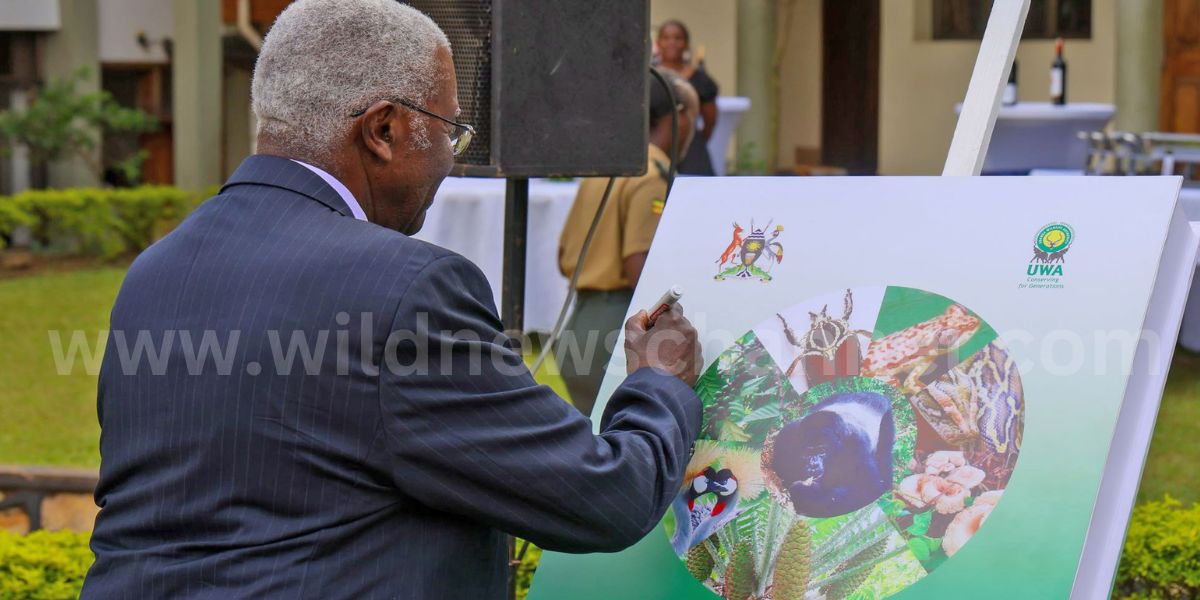 The report, the first of its kind since 2021, was compiled with support from conservation groups including the Jane Goodall Institute, Nature Uganda and the Wildlife Conservation Society.
Tourism Minister Tom Butime officiated at the launch ceremony.
Musinguzi urged policymakers, investors, conservationists, and communities to treat the report as more than just another publication.
“This publication should not gather dust on a shelf,” he said. “It must guide policy, attract investment, inform debate, and strengthen our collective responsibility for wildlife conservation,” he concluded.