


In western Uganda lies a wildlife paradise that stirs more than curiosity. It awakens wonder. Queen Elizabeth National Park is not merely a destination to visit, but a landscape to feel: vast, untamed, and endlessly rediscovered, writes Gerald Tenywa.
Here, ancient lakes exhale mist into the first light of dawn, while the Kazinga Channel threads through sweeping grasslands like the lifeblood of Africa itself. Beneath immense skies, elephants roam the plains, lions laze in fig trees, and every horizon seems to carry the pulse of the wild.
In this land of untamed beauty, elephants shape the landscape with slow grace, lions awaken the dawn with distant roars, and hippos rise from ancient lakes of time. The Kazinga Channel runs through it all like a flowing breath of life in the heart of the wild. The chimpanzees of Kyambura Gorge greet the day with piercing pant-hoots.
As I arrived at Katunguru along the Mbarara–Kasese Highway, the sky erupted with birds in restless motion, as though the wilderness itself had staged a silent welcome. Beyond them, the park lay wide open and appears ready to satisfy every wanderer’s hunger for wonder.
Nearby, children tried to count the birds, but the flock kept shifting, multiplying beyond measure. Before long, they surrendered in laughter as the sky turned into a living storm of wings.
Amid the rising excitement in Katunguru, a young guide, Dennis Omondi, stepped forward with an easy smile and quiet confidence. He led me into the wild, where nature revealed its timeless theatre.
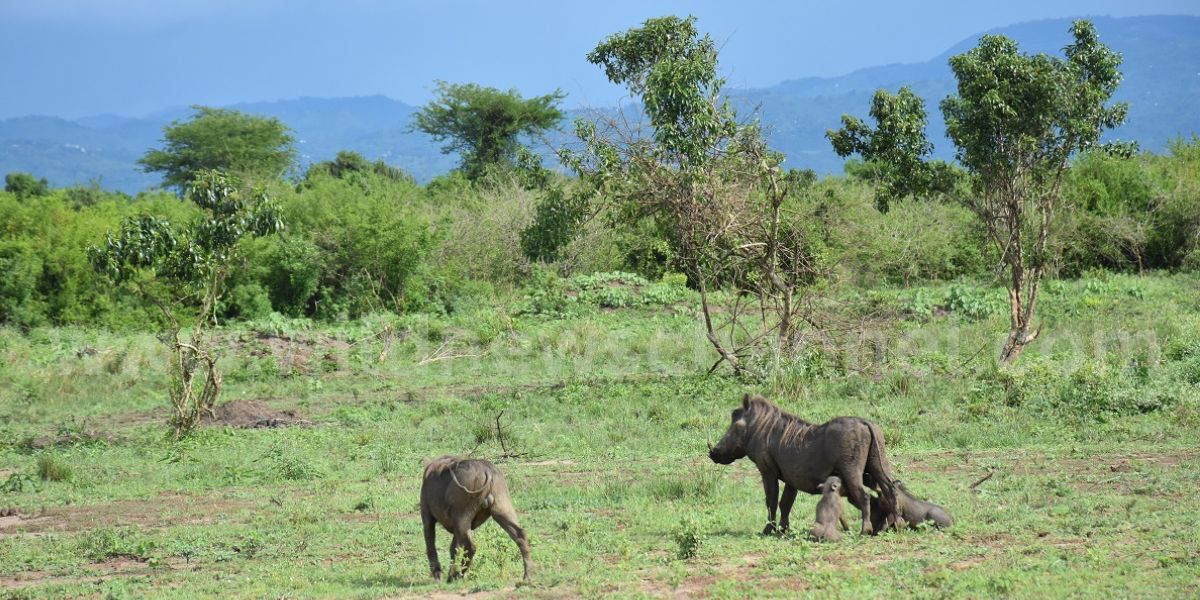
The first to emerge was a warthog, followed closely by her two tiny piglets. She grazed patiently, unbothered, while the energetic little ones darted beneath her, scrambling for their share before she could finish feeding.
Omondi pointed toward the animal. “Kasongo,” he said — a familiar target for lions and other predators. Then, without warning, the calm shattered. A male warthog burst into sharp alarm calls, tail raised high like a flag of danger sweeping across the plains.
This moment unfolded at Mweya Peninsula, a famed gateway into the park’s wilderness, where nature stands open, waiting to be witnessed. It stands as one of the park’s most visited locations, where the wild reveals itself in unbroken stillness.
The game track skirts the Kazinga Channel, where untamed plains offer rich grazing for countless wild animals. Nearby, the channel flows as a vital thread between Lakes Edward and George, quenching the life it nurtures.
“We have rich grounds for visitors to drink in with their eyes and carry back to the world,” says Omondi, adding that this wildlife paradise belongs to those who come in search of pleasure and discovery.
“We have rich grounds for visitors to drink in with their eyes and carry back to the world,” says Omondi, adding the wildlife paradise belongs to those seeking pleasure and discovery. Along Kazinga Channel, hippopotamuses in short hippos rise and sink in slow procession, their massive forms breaking the still waters like living relics of the wild.
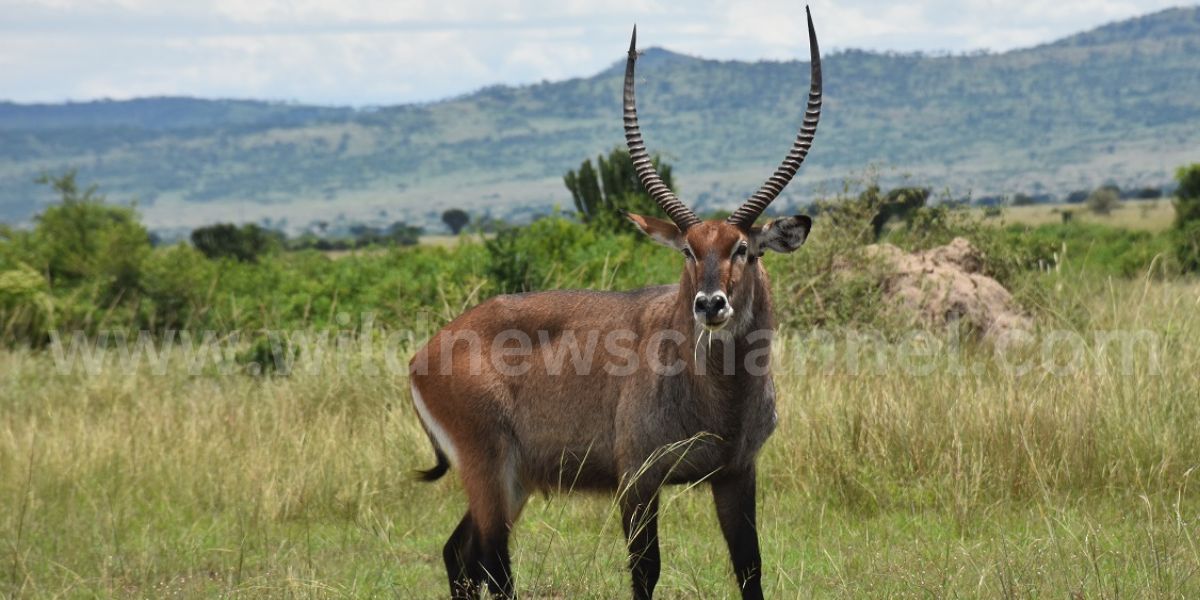
Hippos share these waters with elephants, lions, hyenas, and buffalo, while antelopes graze, waterbuck linger at the edges, crocodiles lie still in the shallows, and leopards move like shadowed memory. It has about 100 mammal species.
Queen Elizabeth hosts over 600 bird species, exceeding the entire United States in birds diversity, according to Nature Uganda’s executive director, Achilles Byaruhanga.
First named Kazinga, the 1,978-square-kilometer park in western Uganda in 1952 was renamed Queen Elizabeth National Park in 1954 to commemorate the visit by Queen Elizabeth II of England. Today, it stands as the country’s most visited savannah park, celebrated for its rich biodiversity and iconic wildlife, including the famed tree-climbing lions of Ishasha.
It offers exceptional game-viewing opportunities, set against a magnificent landscape, according to Omondi. The park also has a rich cultural heritage.
The Uganda Wildlife Authority (UWA) has branded Queen Elizabeth as a “medley of wonders,” according to Fredrick Kisame, the Chief Warden of Queen Elizabeth Conservation.
Straddling the Equator, the park carries its own markers where the Mbarara–Kasese Highway meets the world’s midline, a subtle landmark of its uniqueness.
How do you get there?
Getting to Queen Elizabeth involves several travel options, depending on your budget and timeframe.
The Mbarara route is the most popular. It begins in Kampala along the Masaka–Mbarara highway, crossing the Equator before continuing through rolling countryside. The journey takes about six hours in total.
The Fort Portal route starts from Kampala via Mubende to Fort Portal, then descends to Kasese. It is especially rewarding for travelers combining Queen Elizabeth with Kibale National Park.
From the south, travelers coming from Bwindi Impenetrable National Park enter through Ishasha, a scenic journey of about three hours into the park’s southern sector.
Budget travelers can take daily buses from Kampala’s Kisenyi Bus Park to Kasese town, then use private taxis or shared minibuses to reach the park gates.